
Devin Devine, flagstone guy
610-301-4269 devin@devineescapes.com
Ask Devin: Should you use loose clean gravel or crushed stone with fines?
flagstone advice from someone who’s been in the trade for 29 years

- road base type/1″ minus/modified gravel as the foundation.
-
1/4″ minus/grit/screenings/quarry dust/fines as the bedding material/leveling agent.
-
the same material is what I use for the joint.
- An overview of my time-tested process can be found HERE
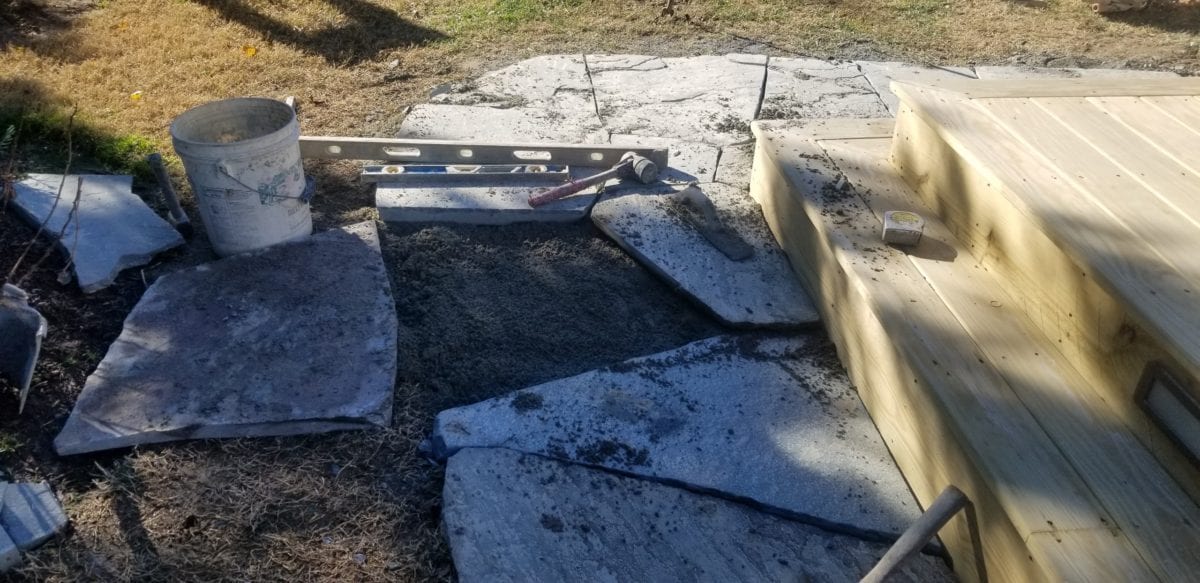
process photo
Does a clean gravel foundation facilitate drainage in any way?
Well, what you have is about 6 inches of clean gravel and about an inch of clean chip gravel. Beneath that you have compacted clay sub soil. So. The clean gravel then just provides voids for water to potential sit within, before slowly being absorbed by the clay. At the most then–you’ve possibly created a temporary holding space for water. But as I stated in the first paragraph–
If your joints are reasonably spaced and your patio is pitched properly to shed water then this is a non-issue.
Not very much water is getting down into that foundation any way and whatever water does make it down there is setting into the soil either way. In the temporary–do you want that nominal amount of watr to sit in crushed stone, or within voids between clean gravel.
It seems those voids just give water a place to sit. On top of compacted clay. Like little mini subterranean bodies of water.
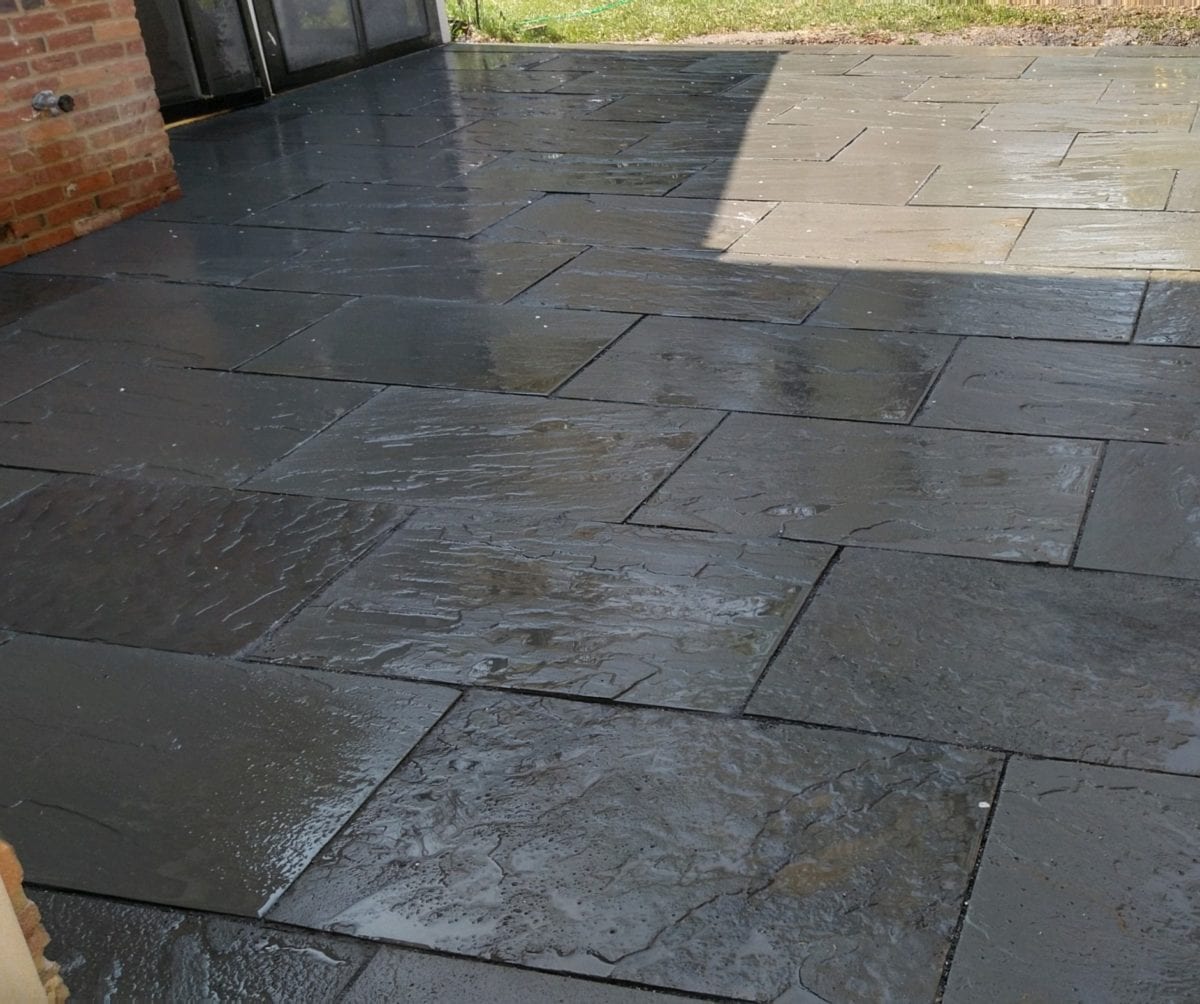
Gravel with fines is a material that you can compact. Clean gravel is loose. See the problem? You can build on a sturdy foundation, or on a bed of ball bearings.
It’s like a driveway. Use clean gravel aka LOOSE gravel–and it will spill out everywhere.
This is why “dirt roads” are paved with gravel that has fines. Because loose material is less likely to stay put.
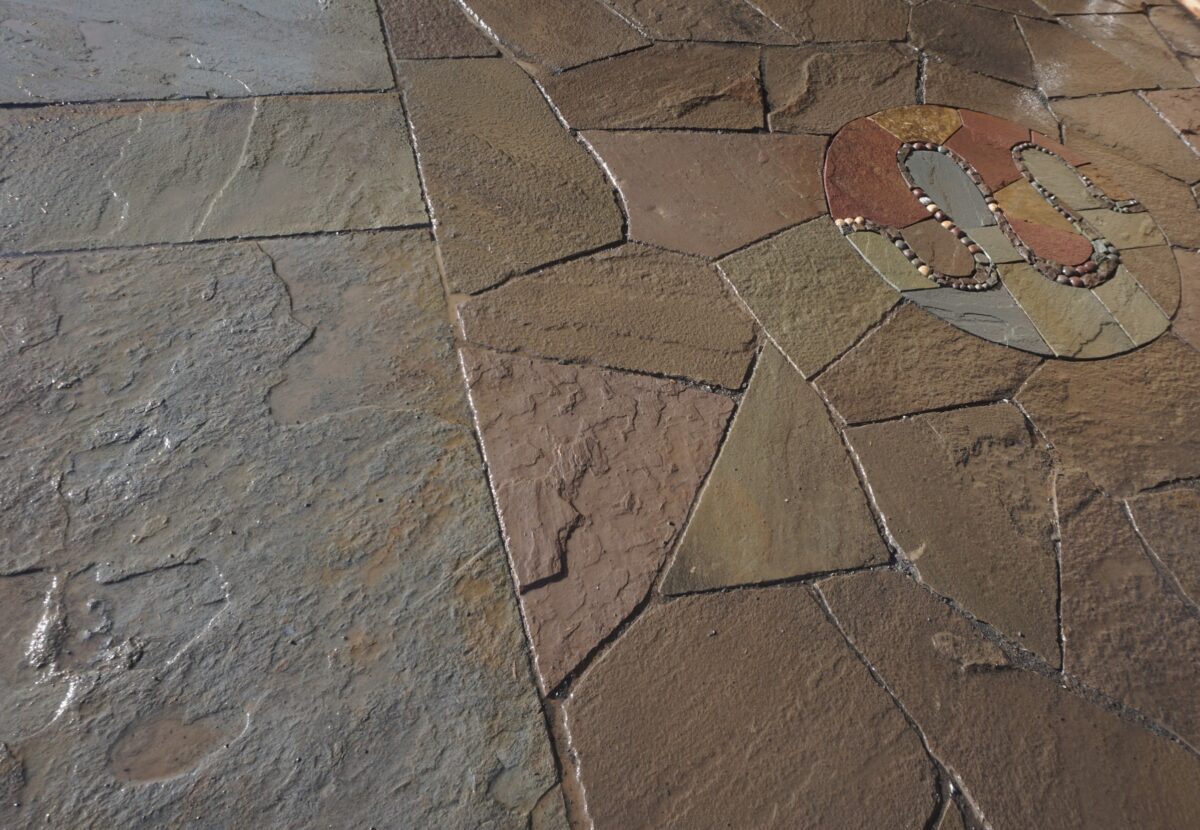
The advice that I give here is for irregular natural shaped flagstone, square cut flagstone or artistic mosaic work. In any case: this is high end artisanal work and should be done using the best methods and all natural ingredients.
Why does bad DIY advice proliferate?
- Too many people just want engagement. The fact is that nowadays there are people who will post a new tutorial every time they learn a new thing. Luckily you at least have me, offering advice on matters that I have decades of experience.
- They want to sell you a manufactured product,such as polymeric sand or resin sand (plastic sand) or paver base (plastic foundation) or plastic edging
What I can promise you is that none of these products will make the work last longer or look better, but rather the opposite. The funny/sad part is that they don’t even really much installation much easier either.
Time tested methods are what you want:
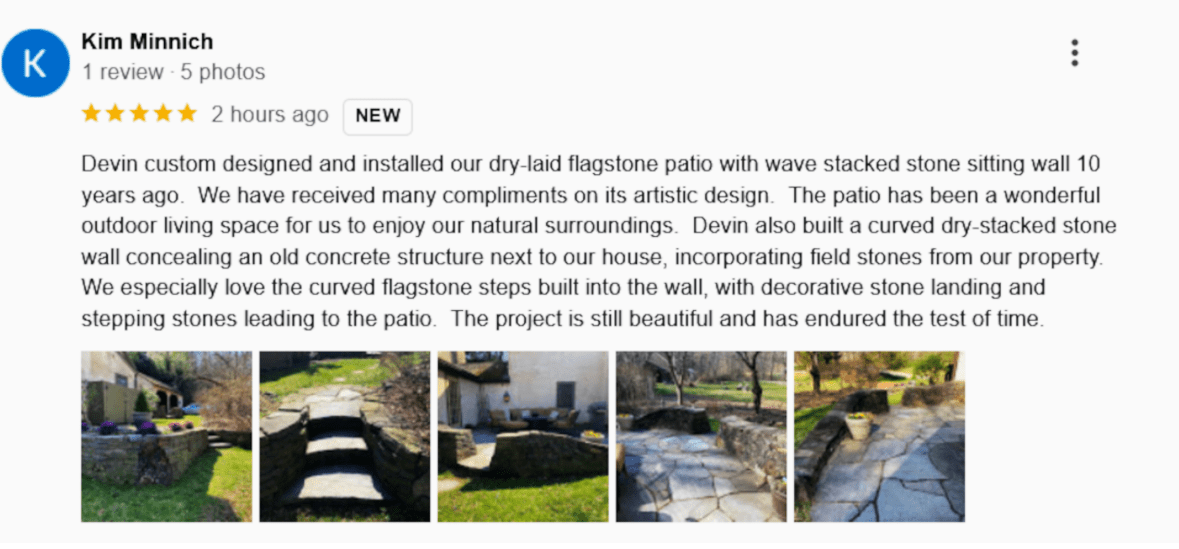
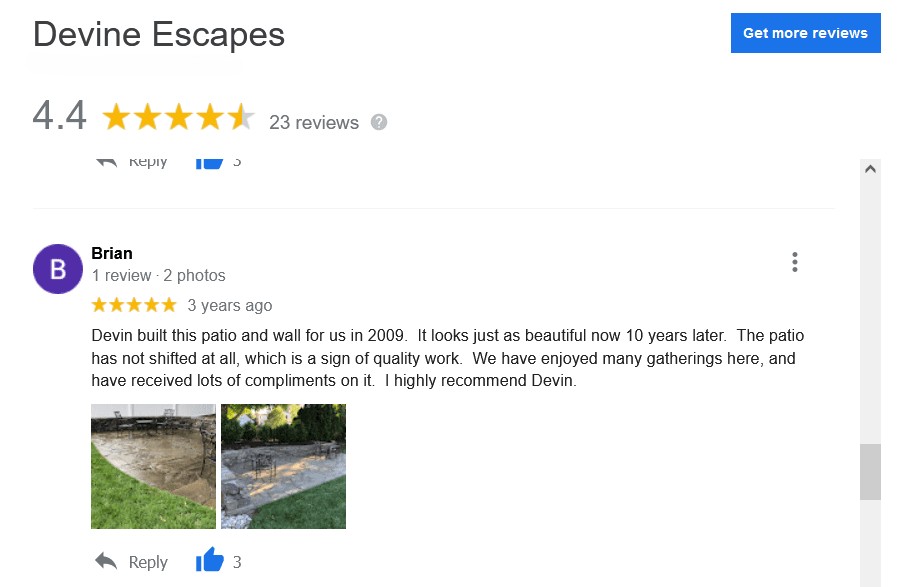
I check in on my jobs 5, 10 and 15 years after the fact:
1 on 1 phone consultations
DIY hardscape/masonry/flagstone help rates:
$143.00 for one hour
$93 for a half hour
Monies are payable via Venmo, or paypal (add $5 for paypal orders)
Thank You


Trackbacks/Pingbacks