Select Page
note: I also write DIY/how to articles on this subject, as well as offering one on one instruction by phone or email
Dry Stone Masonry Contractor Based in the Poconos

I love to build dry stone walls. From simple retaining walls and driveway entrance walls, to more elaborate shapes and interesting configurations. I build them across the USA–and right here in the Poconos.
We build dry stone walls in Blakeslee and Jim Thorpe
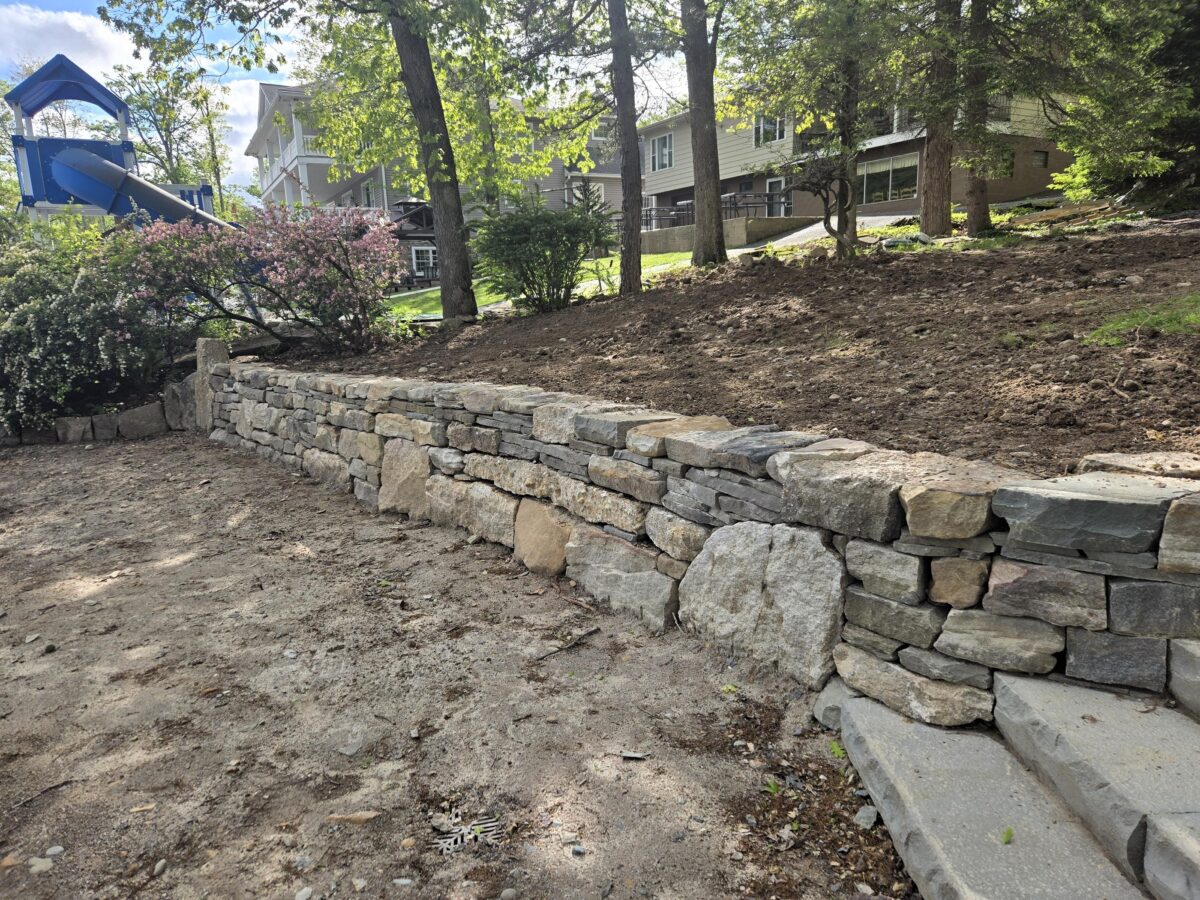
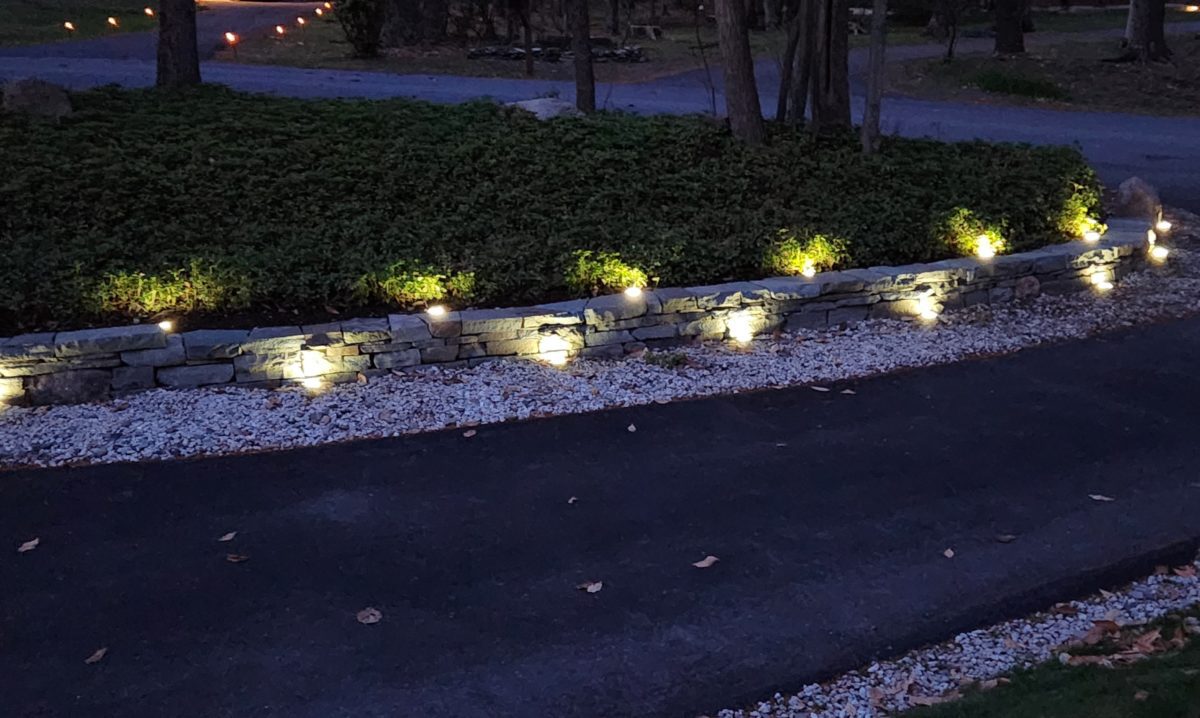
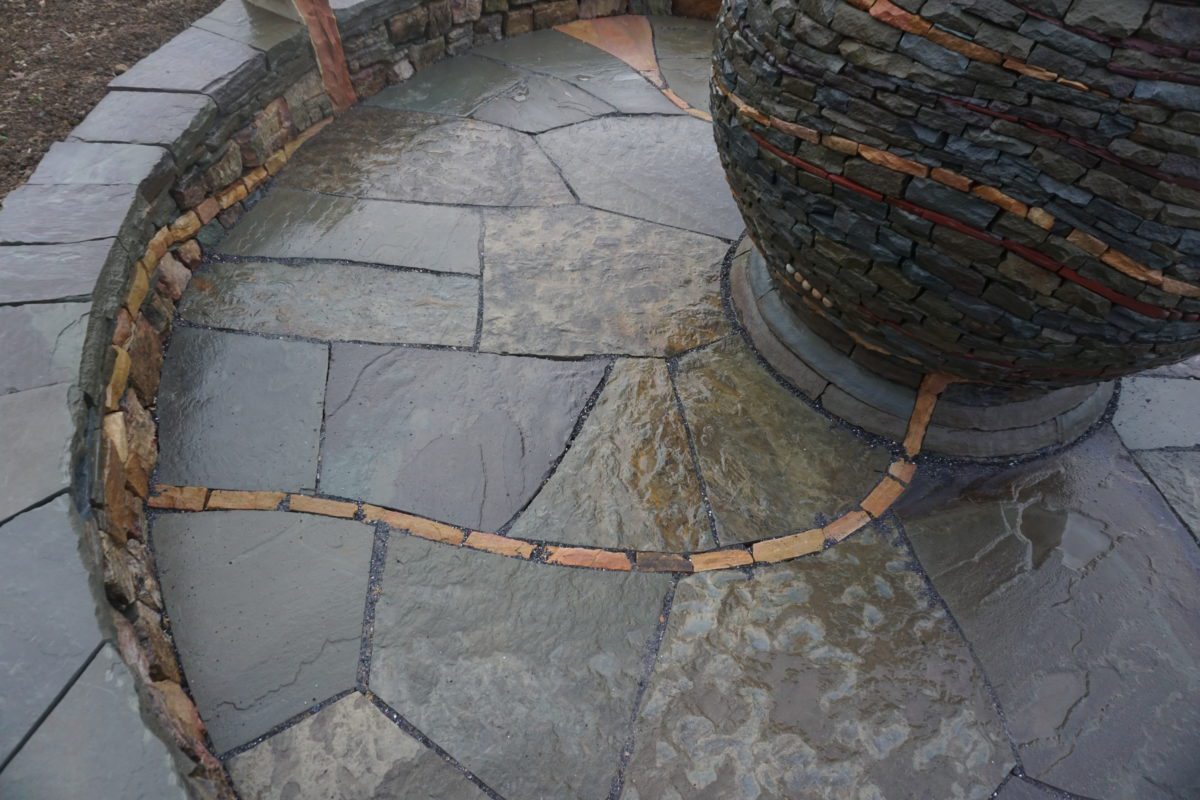
How to build a dry stone wall (excerpt)
Organize your stone
Organization is of prime importance here. Basically that’s all you’re doing, when building a wall–you’re organizing stone into a cohesive structure. Chances are, you’ve purchased your stone from a stone yard, quarry, masonry or landscape supplier. Then again, maybe you’ve sourced your stone from a hillside, creek-bed, or a fallen down barn, or an old collapsed field wall. Wherever your stone came from, it’s going to need to be organized, to make a decent wall. And if you don’t organize, then you’ll waste time and likely end up with a not-as-good wall.
Why might your wall be less good, if you don’t organize your stone? Because maybe you only have like 10 good corner stones. You need to get them sorted out, before they get used elsewhere. Then again, maybe you have hundreds of good through-stones, that could also be used as corners or caps–but you don’t know that, because you never organized the pile. Not knowing what you have, you could be building up tons of wall, while saving most of your precious through stones, not knowing that there’s plenty, and they ought to be used.
- cap stones
- corner stones (quoins)
- through-stones
- face-stones
- pins/shims
- larger rubble
- and hearting.
Cap stones
You want your cap stones to span the width of the wall, and be fairly heavy. Sort out all the stones that are of appropriate size. My ideal cap stones are usually right around 14 inches deep (the width of most of my walls, at the top) and 3 to 6 inches thick, varying lengths. I want them to be heavy enough that they stay put and aren’t dislodged by someone climbing or walking along the top of the wall.
Corner stones
Corner stones and cap stones are often interchangeable–if I can’t find the right corner stone from my corner stone pile, I’ll have a look at the cap stone pile. You’ll want your corner stones to be larger, square stones. I prefer most or all of my corner stones to span the width of the wall. If the wall is 2′ wide at the base and 14″ wide the cap, then I’ll be looking for corner stones between 14 and 24″.
Through-stones
Stones long enough to connect the front of the wall, with the back of the wall are called through-stones. They tie the wall together and give the wall much of its strength. I call a through-stone, one that goes all the way from the front face to the back of the wall. If you don’t have enough through stones that are long enough to tie the two faces all the way together, then you can use “tie stones”–two long stones that aren’t quite long enough, laid next to each other, uniting the two faces together.
(insert drawing/photo)
How many through stones does a dry stone wall need? The answer is–plenty. I’ve never had a set formula per se`, I guess you could say it’s done by feel, but usually it ends up being one through stone after 4 to 8 lineal feet per course. Each course is done similar, and you don’t need throughs right on top of each other, so I guess you could say the throughs get staggered too–I end up with a through every few feet of wall.
(insert drawing/photo)
How many through stones does a dry stone wall need? The answer is–plenty. I’ve never had a set formula per se`, I guess you could say it’s done by feel, but usually it ends up being one through stone after 4 to 8 lineal feet per course. Each course is done similar, and you don’t need throughs right on top of each other, so I guess you could say the throughs get staggered too–I end up with a through every few feet of wall.
Face-stones
Wall-stones that will look good and are large enough to be used in the face of the wall are called face-stones. These stones have been sorted through, with square corners and long through-stones etc removed.
Generally, you want the face stones to be set with the length running into the wall, rather than out across the wall. The walls that I’ve repaired have usually (almost 100% of the time) been single-faced walls. Not only that, but they usually have the length of the stones running out across the wall. Finally, these single-faced walls are usually backfilled with rubble and soil, or even worse–gravel.
Pins/Shims
Small chips of stone that are used to stabilize wall stones. You set a stone in place and if it wobbles, you pin it, from the back (preferably), basically sliding a shim underneath it to stabilize it. Keep face-pinning to a minimum, as any small stones on the face of the wall may fall out, over the years.
Larger rubble
If you’re building a retaining wall, then larger rubble, funny-shaped stones can be used in the back of the wall. The back of your wll doesn’t need to be pretty, just stable.
Hearting
Hearting is made up of smaller rubble, stones too small to be used as a stable face-stone. Chunks of stone about the size of your fist and gold-back sized pieces of stone…..you don’t want to fill your wall with little gravel sized bits. Don’t shovel your hearting in to place. Fit them stones nicely–this is the heart of your wall.
Usually, we create a a bit of hearting by cutting stone to fit, usually just with a hammer. Various chisels are in stand-by, the grinder’s not too far and the gas saw is usually with me, although it’s rarely used on a dry stone wall job.
How much stone trimming, shaping and cutting is done on a wall depends somewhat on the stone type, and also on the job–where is it located? Is this a pretty wall, part of a garden or patio? Or is it retaining a hillside and needs to be strong and look good, but won’t be seen from up close. Also, what type of stone is it, and how is it sized? Many types of stone cleave off in nicely planed pieces, and can be knocked into a square shape with just a few whacks with the hammer.
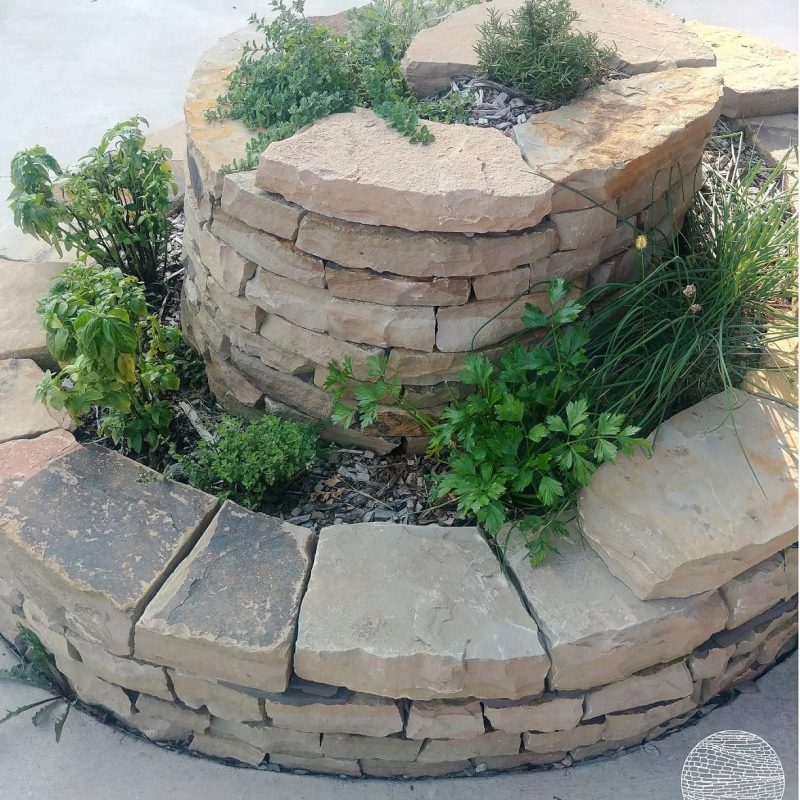
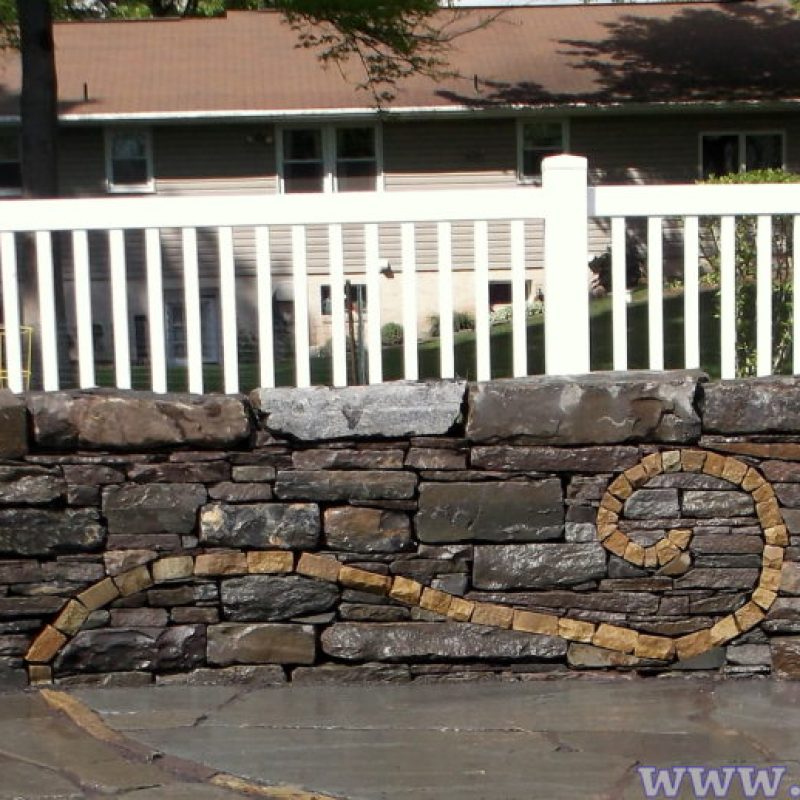
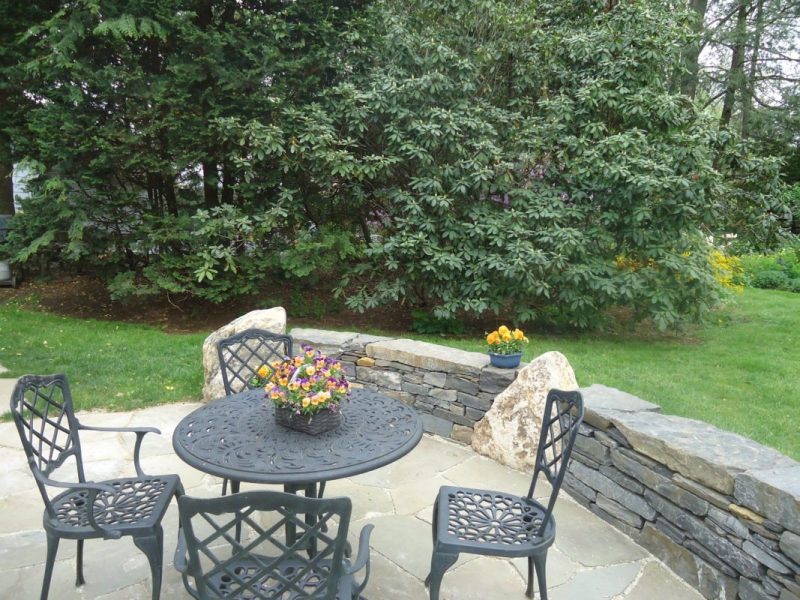
Herb spiral. Dry stacked stone wall, in spiral form, to facilitate micro-climates for varying herb types
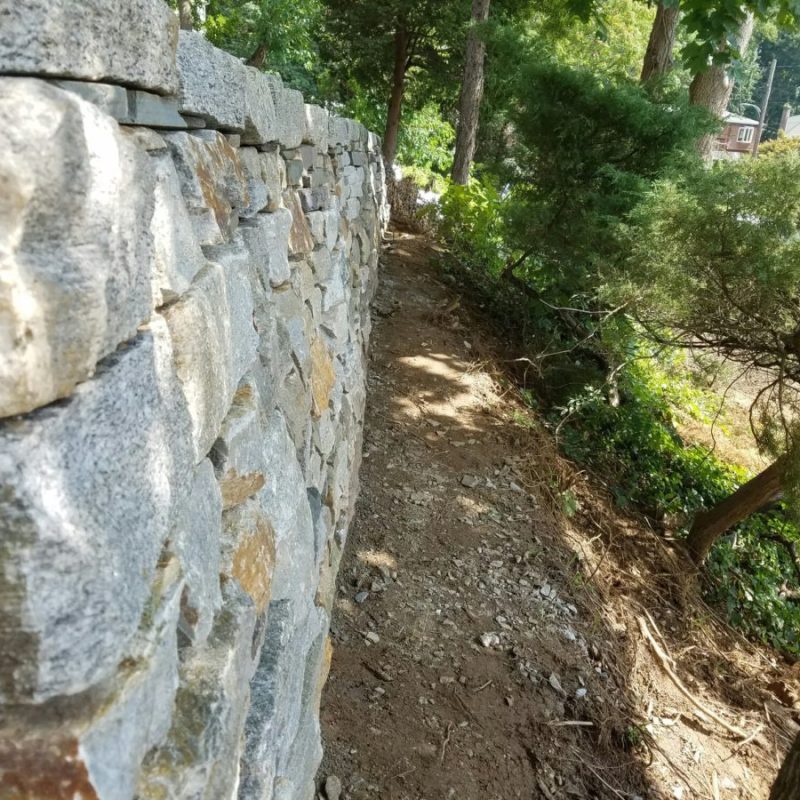
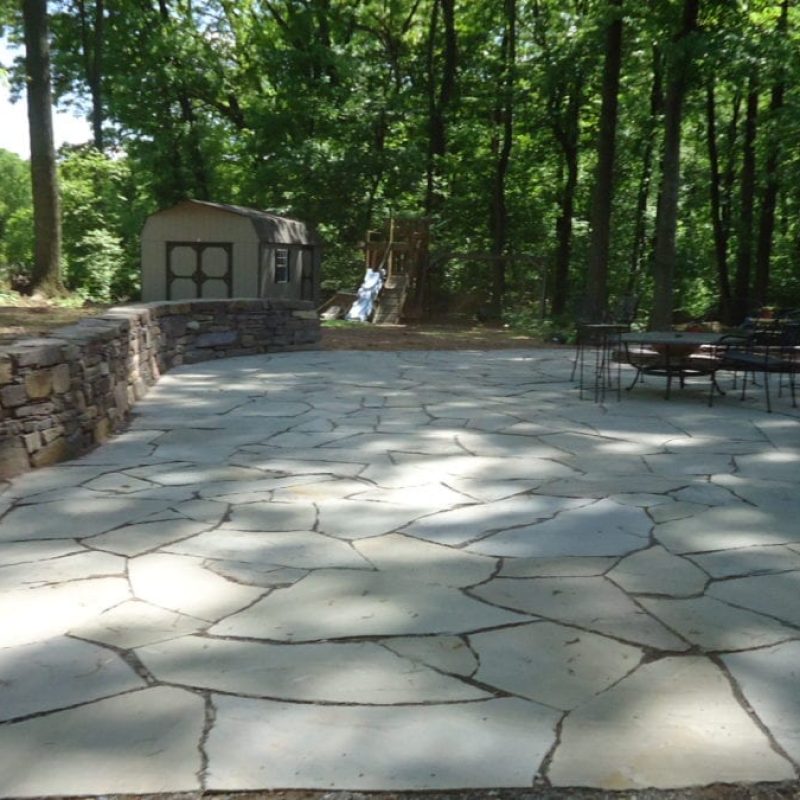
Herb spiral. Dry stacked stone wall, in spiral form, to facilitate micro-climates for varying herb types
Dry stone masonry
We have plenty of stones in Pennsylvania. yet back in 2007 when Devine Escapes was getting started, a lot of people who I talked with had never heard of dry stone walls. But try digging a hole–you’ll see! Some areas in Pennsylvania, in which I have had the privilege of working, are actually full of dry stone walls. Honesdale (near Scranton) and Chester Springs are both naturally rocky areas and both places have many dry stone walls. Mostly old and historic, but some brand new or re-built. Actually, there’s walling traditions around the world, but I’ll get into that another time. Anyway, so over the years I’ve worked with masons and landscapers, learning various methods and styles of landscape wall building. Eventually deciding that dry stone craft is a)the most beautiful b)ultimately the most durable and c) as a builder, the most challenging. There’s no cement to hold it together–each stone must be placed in a manner that supports the entire structure. Stones are woven together, nicely interlocked, not merely stacked.
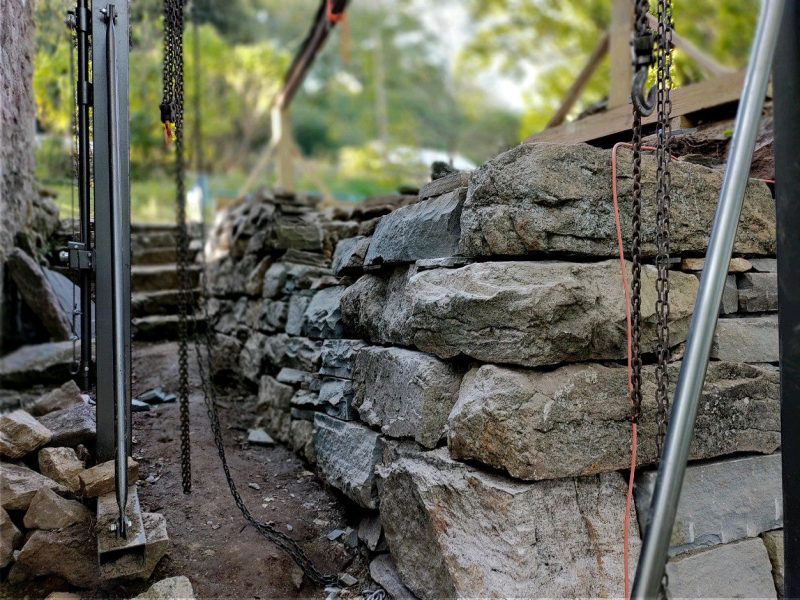
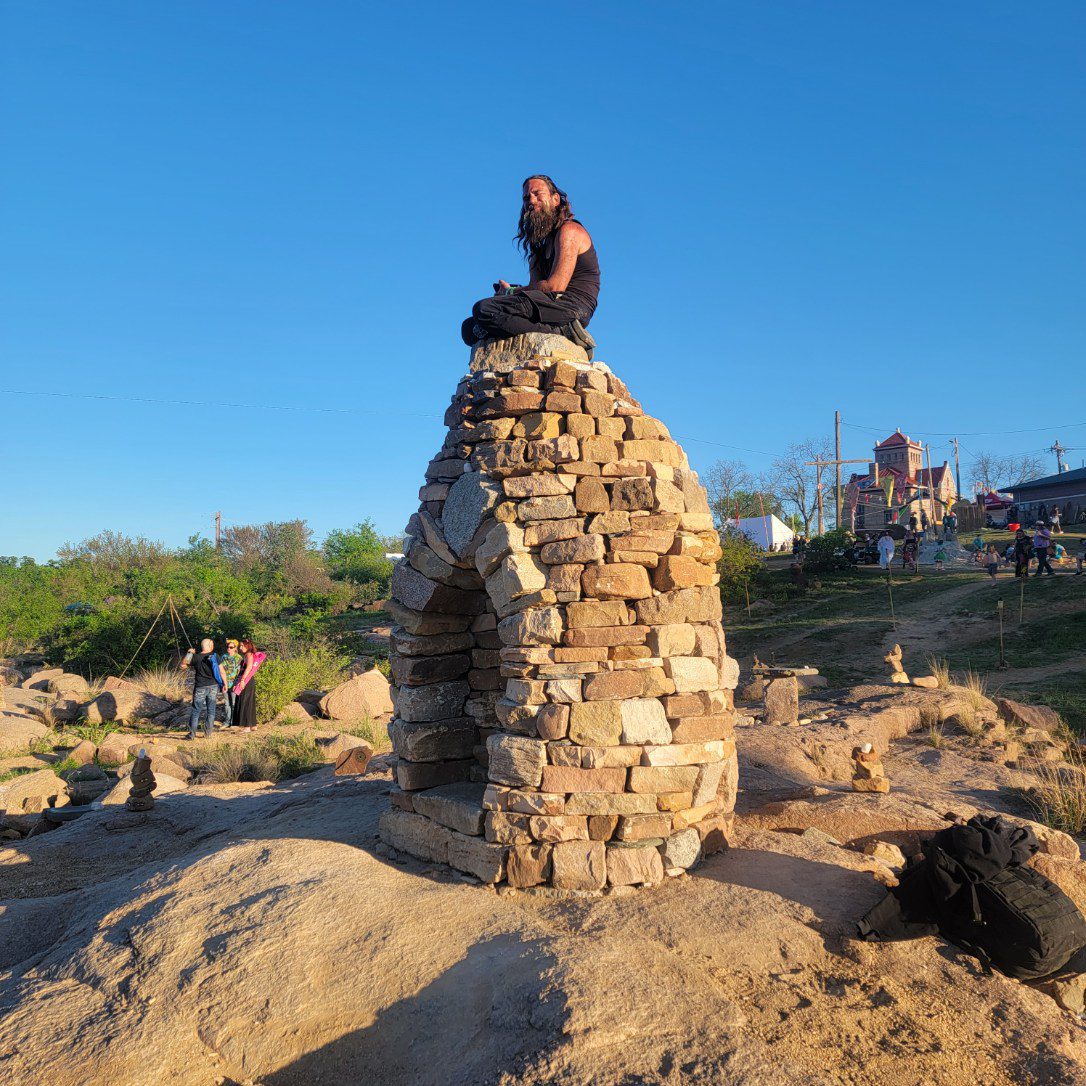
works in stone by Devin Devine:
What is best in life? Stone walls that last
Therefore, It is my hope and belief that these walls will last a long long time and bring joy to the home owners and visitors for many years to come. Dry stone walls flex with the ground, rather than standing rigid, like mortared walls will. Properly constructed, they will allow water to flow through them without having any hydrostatic pressure build up behind them.
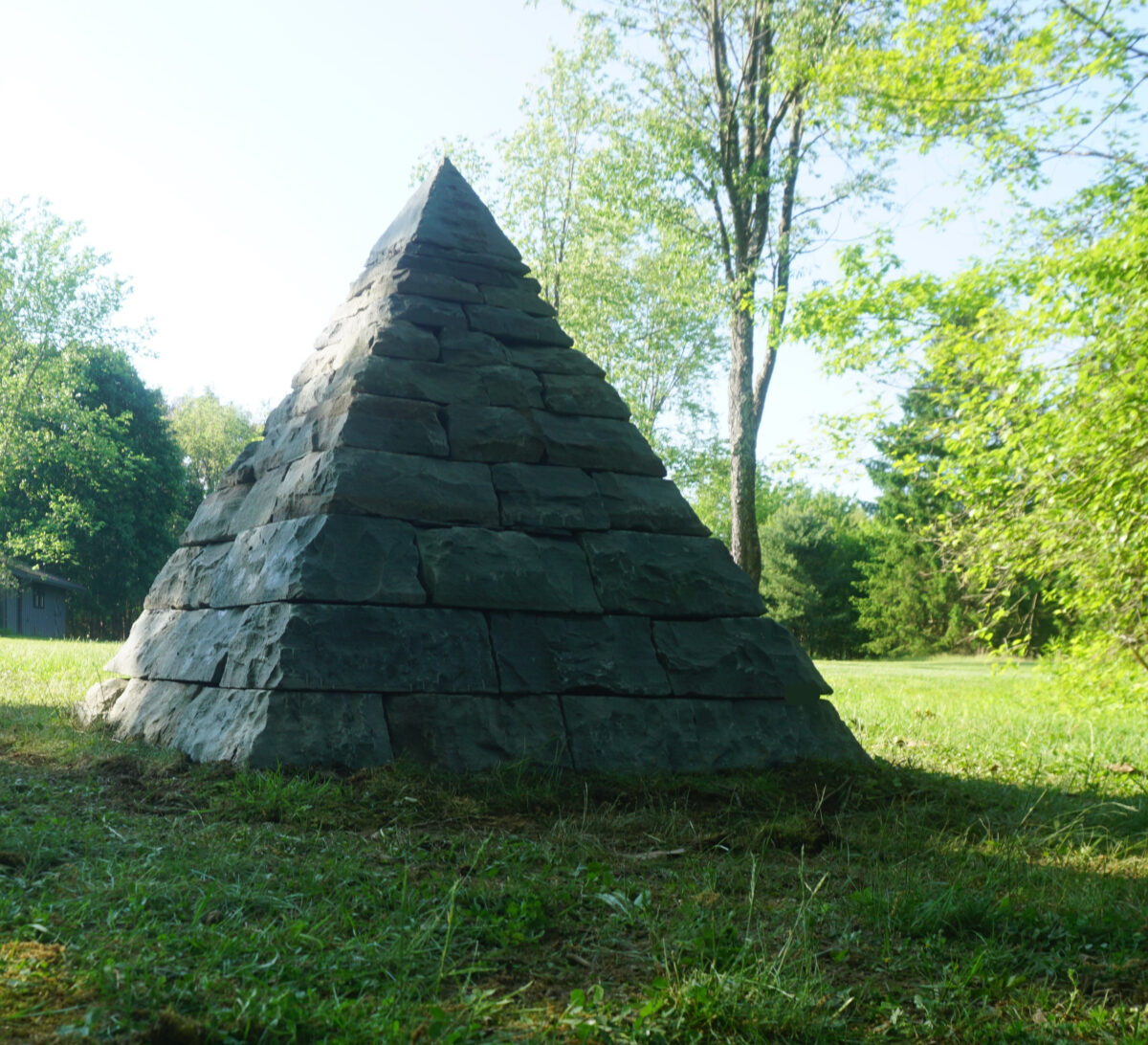
Really, I could go on, praising the benefits of dry stone walls as compared to other landscape wall systems. The fact is, I just like them better. Nothing man-made is going to compare to the beauty of natural stone. I’ve been doing stone work awhile now, and I like to get creative with it. For example, sometimes I set stones in a novel configuration, yet still in a structurally sound manner. Still, a simple, unassuming dry stone wall with character and presence will always bring satisfaction, with or without any artistic flourishes.
Thank you