
Devin Devine, stone mason based in Blakeslee PA
610-301-4269 devin@devineescapes.com
Project Overview
Masonry restoration project. These granite steps and parapet walls needed some help.
- The one step was off-level and the one wall was still technically in place, but every stone was loose.
- The other wall just had a couple stones loose, cap stone to be re-set
- all of it needed re-pointing.
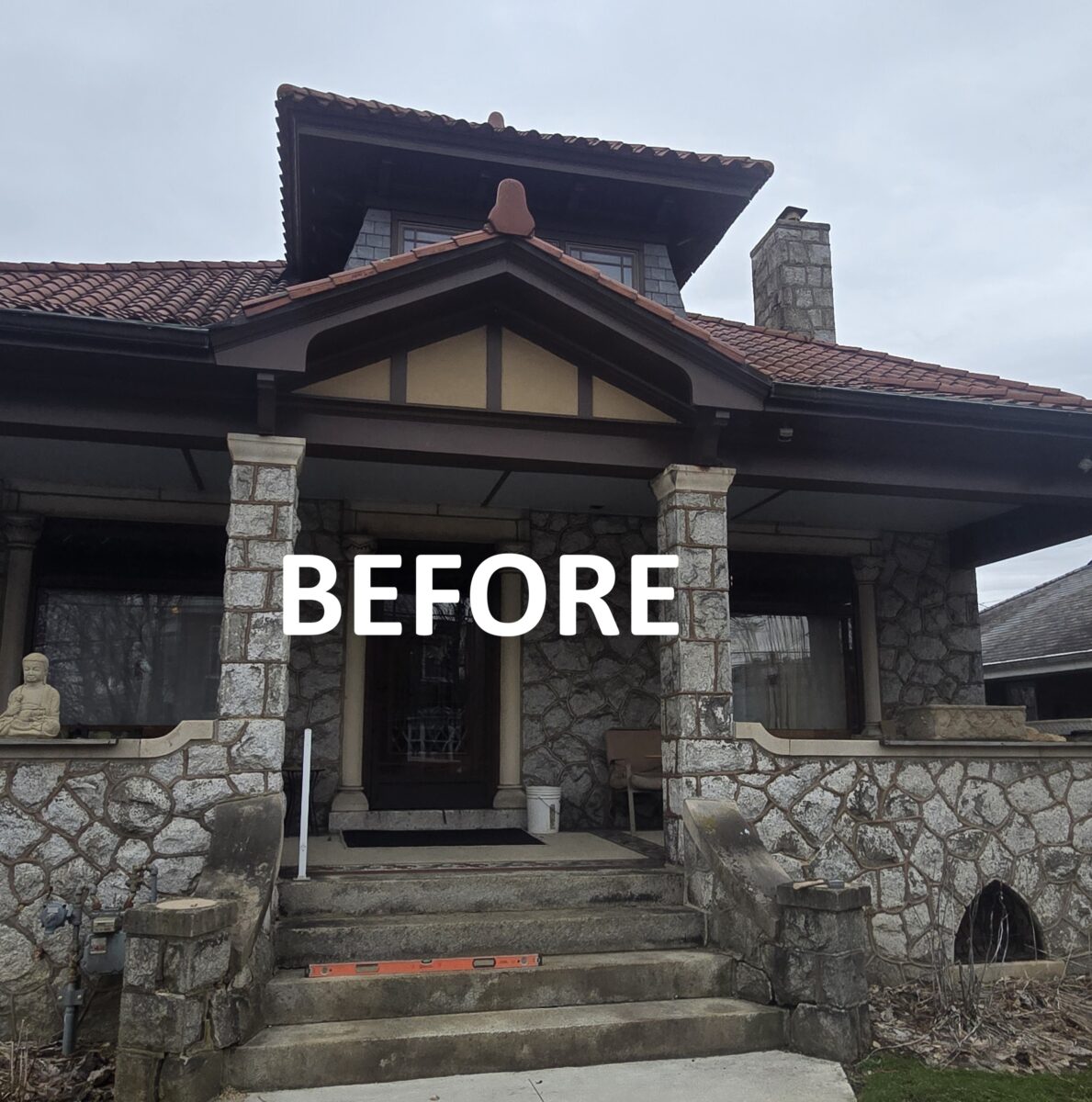
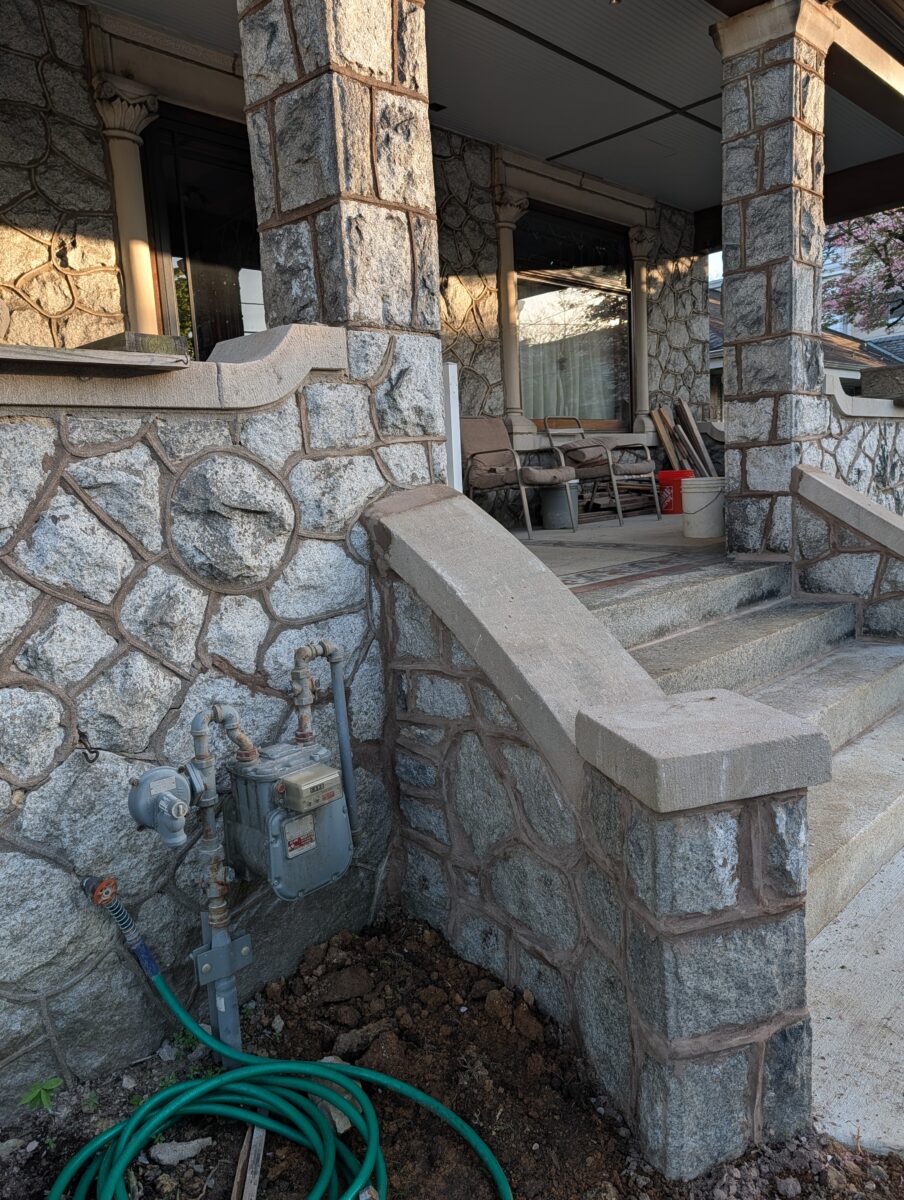
Re-leveled the step–without needing to rebuild the other wall too– by banging in a couple steel wedges to left the step, and then fitting in a couple of stone wedges….then removed the steel wedges and pumped concrete into the voids.
Masonry Restoration work is an Art
Matching the style of work done over 100 years ago. Here we didn’t just repair, but completely tore down and rebuilt a wall. Though the stones were numbered I did choose to replace 5 of them, set in a more structurally sound manner, hoping to get more than 100 years this time.
My customer learned of my work from seeing me on local TV, Channel 69 in Lehigh County, over the winter. My artistic masonry work can be seen in the selected work gallery.
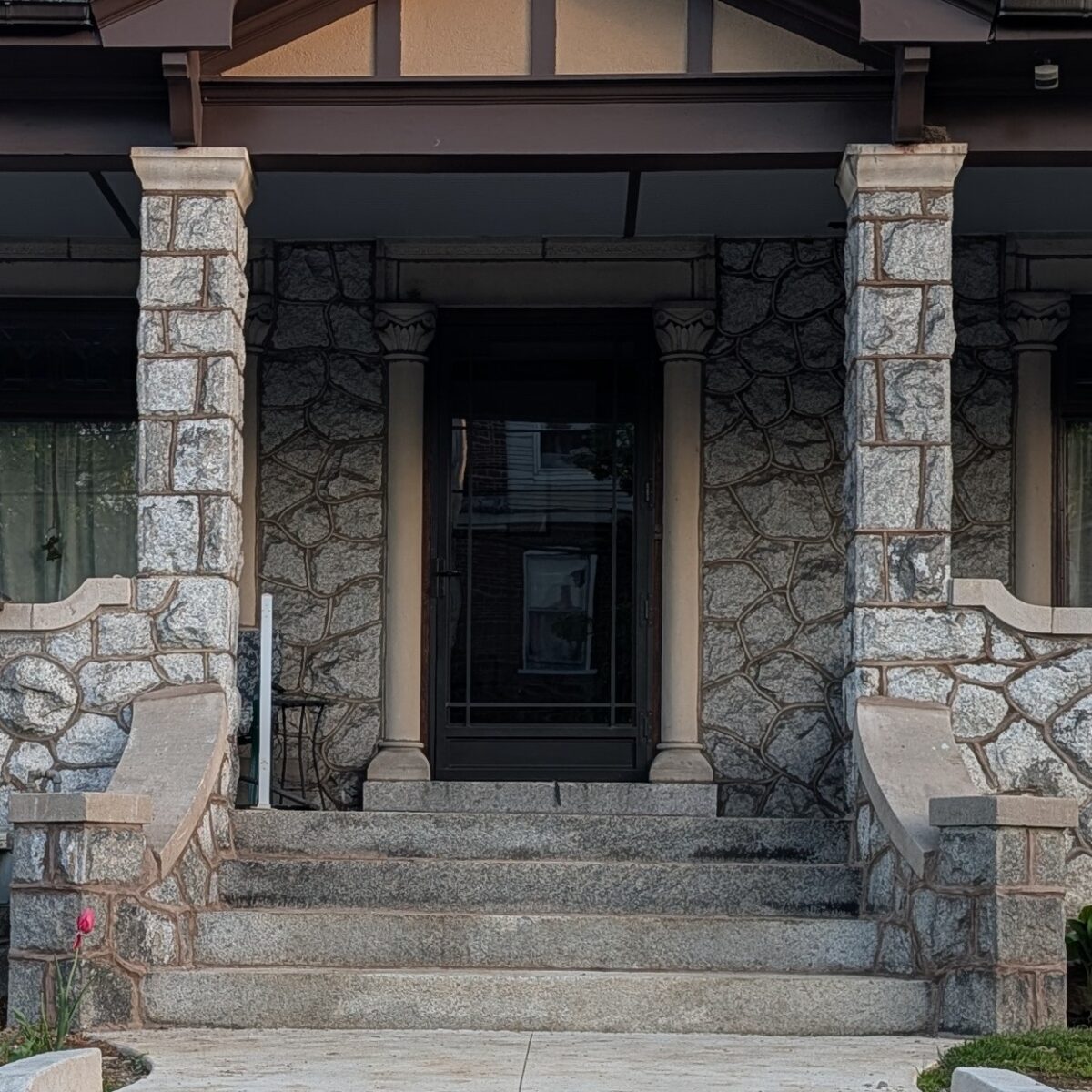
I numbered every stone on the falling apart wall. Took photos, made a drawing, and a video to keep track of the numbering system, then took it apart and re-leveled the step. Next we rebuilt the wall and re-pointed everything to match the color and style of the existing masonry work.
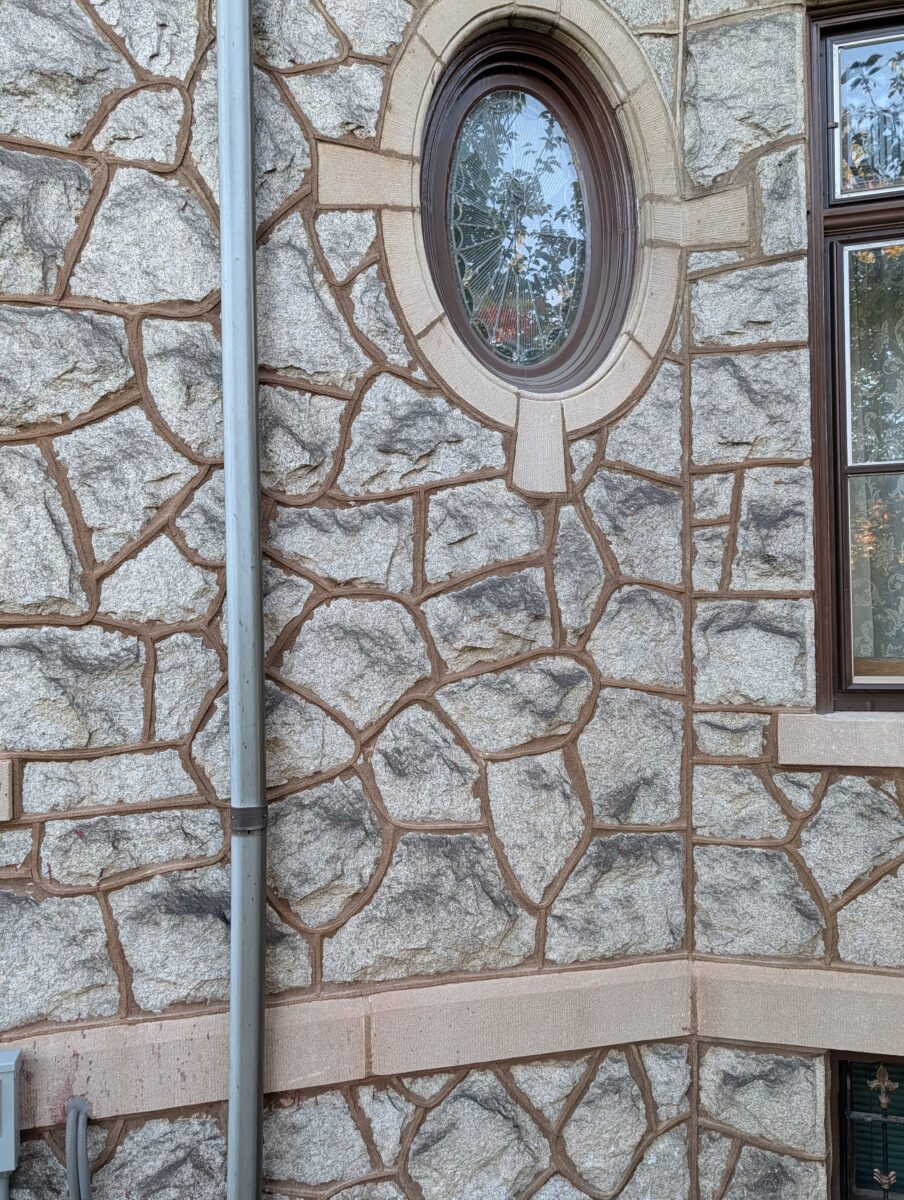
Is the trimwork on the granite house limestone, or cast concrete? At first my customer and I were both unsure. But I r-set a few of these stones and I can assure you they are limestone. When I removed the cap stones I saw chisel marks on the bottom indicating: stone. Also I chiseled into it myself, finding its inner texture to be like Indiana Limestone, with no aggregate present like you’d see with concrete.
Restoration work. Is the mortar lime or cement?
The house was built back in 1916, so I thought perhaps it might be a lime mortar. Nope! Many signs conclusively point to it being cement. The walls are only 12″ thick, with all stones set upright, rather than on a bedding plane. You can’t get away with setting stones in lime mortar upright like that, as veneer type stones. The 6 stones I replaced are now set deep into the wall, on their bedding plane, for greater structural integrity, of course. Also, the wall we dismantled had a concrete foundation. A vinegar test also was performed. When doused in vinegar there was no immediate and visible fizzing.
Pennsylvania was early to adopt to Portland cement–with production centered in the Lehigh Valley.
The Coplay Cement Company was located along the west side of the Lehigh River and along side of the Lehigh Valley Railroad (L.V.R.R). Early in the 1870’s, Sailor began to experiment with the manufacturing of portland cement from rocks from his own quarry.
On a related note, here’s how to color match old mortar to existing masonry.
Contact Devine Escapes for top-level stone masonry
Providing top-level stone masonry service in Allentown 610-301-4269


Trackbacks/Pingbacks